English| EUR
Suggested for you
More currencies
Choose a language
A river cruise from Frankfurt to Amsterdam traces one of Europe's most traveled inland waterways, linking the Main and Rhine rivers across 450 kilometers of vineyards, medieval towns, and industrial heritage. Most sailings take five to seven nights, with daily shore excursions and lock passages that drop the vessel 150 meters from the German highlands to the Dutch lowlands. This guide covers the route, timing, embarkation logistics, and what distinguishes each segment of the voyage.
Quick answer
A river cruise Frankfurt to Amsterdam typically spans five to seven nights, departing from Mainkai in Frankfurt and sailing north through the Rhine Gorge, Cologne, and Düsseldorf before entering the Netherlands near Arnhem and reaching Amsterdam. Most operators schedule departures between April and October, with embarkation windows from 09:00 to 17:00 to align with daylight navigation through the lock system. The voyage covers roughly 450 kilometers and includes overnight moorings in riverside towns.
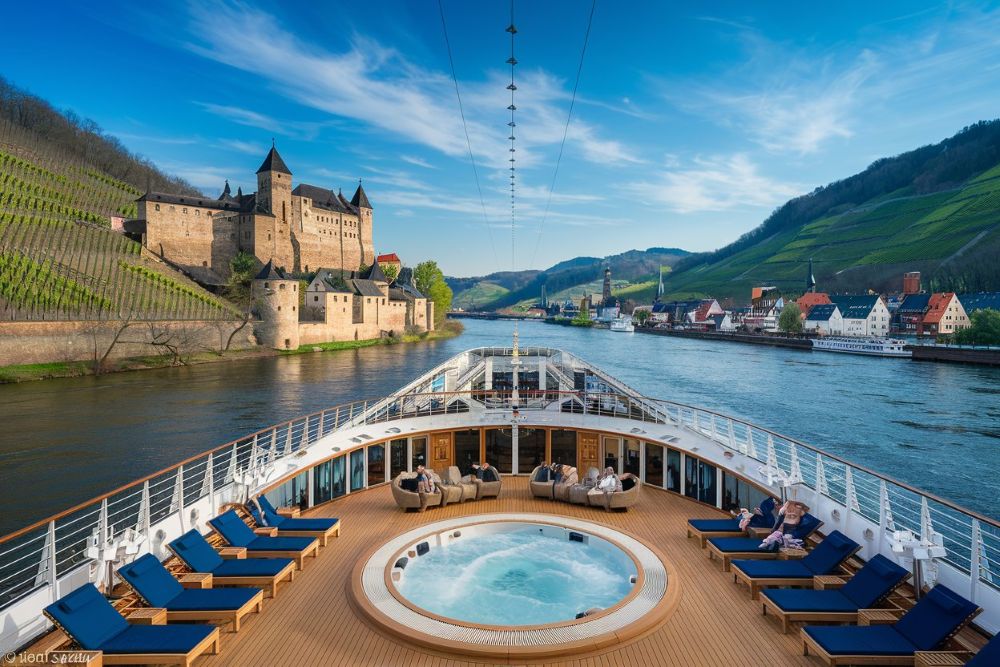
The Main River meets the Rhine at a stone confluence marker in Mainz, 40 kilometers downstream from Frankfurt, and that junction determines the character of every river cruise frankfurt to amsterdam. Vessels depart from Mainkai, Frankfurt's central embankment lined with half-timbered museums and ferry landings, then motor west through industrial suburbs and vineyard terraces before entering the Rhine proper. The first 24 hours are defined by locks—Kostheim, Eddersheim, and a series of smaller chambers that lift or lower the ship in three-meter increments as it adjusts to the river's gradient. The Rhine Gorge, a UNESCO-inscribed valley between Rüdesheim and Koblenz, anchors the second and third days. Castles appear on cliffside intervals—Rheinfels, Marksburg, Pfalzgrafenstein on its mid-river island—and the channel narrows to 130 meters at the Loreley Rock, where currents accelerate and captains rely on radar even in clear weather. Most itineraries moor overnight in Koblenz or Cologne, allowing passengers to walk the old quarters while the crew restocks provisions. North of Cologne the river widens, the banks flatten, and the route enters the industrial Ruhr basin, where barge convoys and container terminals replace the medieval silhouette. Crossing into the Netherlands near Nijmegen, the Rhine fragments into distributaries—the Waal, Lek, and Nederrijn—and the cruise enters polder country, where the waterway sits higher than the surrounding farmland and is held in place by dikes. Amsterdam lies 100 kilometers inland from the North Sea, reached via the Amsterdam-Rhine Canal, a straight-edged channel that bypasses the meandering lower rivers. Final approach brings the ship past the Eastern Docklands and into the city's historic harbor basin, where it moors within walking distance of Central Station. The entire voyage moves at 15 to 20 kilometers per hour, slow enough that the landscape unfolds in real time rather than in glimpses. Most operators sail this Frankfurt to Amsterdam waterway between late March and early November, avoiding winter ice and low water. Spring departures align with orchard blossom along the middle Rhine; autumn sailings coincide with the wine harvest and forested slopes turning rust and amber. Each segment of the route serves a different visual and cultural register—the Main offers quiet riparian scenery, the Rhine Gorge delivers the concentrated medieval iconography most passengers expect, and the Dutch lowlands provide geometric clarity and a sense of arrival. The journey is less about a single landmark than about the incremental transition from one river system and nation to another, marked by the rhythm of locks, bridges, and the shifting width of the channel.
“The Rhine Gorge narrows to 130 meters at the Loreley Rock, where currents accelerate and captains rely on radar even in clear weather.”
Multi-day river cruises from Frankfurt to Amsterdam typically span 7–8 days, combining scenic navigation along the Main and Rhine with cultural stops in historic river towns. This chronological outline reflects a standard itinerary operated by most major river cruise lines.
Board your vessel at Mainkai in the early afternoon, complete check-in, and attend the safety briefing. The ship departs Frankfurt by evening, sailing west along the Main River toward the Rhine confluence.
Navigate multiple locks as the Main descends toward the Rhine, passing vineyards and medieval castles. Most ships reach Miltenberg or Wertheim by midday for a brief shore excursion.
Enter the Rhine at Mainz in the morning, then continue upstream to Rüdesheim am Rhein. Expect a guided walk through the old town and cable-car access to the Niederwald Monument.
Cruise the UNESCO-listed Rhine Gorge between Rüdesheim and Koblenz, passing the Lorelei rock and over 40 hilltop castles. Most itineraries include a stop in Koblenz at the Deutsches Eck.
Dock in Cologne for a morning cathedral visit, then depart north toward the Dutch border. The ship typically sails through the evening, covering the longest single-day distance of the journey.
Pass Nijmegen and Arnhem as the Rhine widens into the Lower Rhine, with flat polder landscapes replacing the German gorge. Evening arrival in Utrecht or a smaller canal town for an optional cycling excursion.
Arrive at Amsterdam's passenger terminal by mid-morning. Disembarkation begins after breakfast, with optional canal tours available for those extending their stay.
The period from May through September offers the most reliable navigation conditions and extended daylight hours for viewing the scenic passage from Frankfurt to Amsterdam. Choosing these months minimizes the risk of service disruptions caused by seasonal high or low water levels.
Mild, 15°C to 22°C
Long daylight hours allow for extended viewing of locks and riverbanks. Spring blooms enhance the landscape along the Main and Rhine rivers.
Warm, 20°C to 27°C
Peak summer provides consistent navigation weather. This is the busiest time for river traffic and tourism activity.
Cool, 10°C to 18°C
Autumn colors provide a distinct visual experience. Water levels are generally stable, though daylight hours begin to shorten.
—
Departing during the best arrival window of 09:00–17:00 ensures optimal light for navigation. Mid-week departures often experience quieter boarding processes.
Verdict: The optimal time to embark is between May and June, specifically on a weekday morning to align with the best arrival window for scenic navigation.
The embarkation point for river cruises is located at Mainkai, 60311 Frankfurt am Main, situated directly along the Main River. Travelers arriving in Frankfurt can reach this central docking area via public transit, taxi, or walking from the city center.
S-Bahn lines S1-S6/S8/S9 to Frankfurt Hauptwache
U-Bahn lines U4/U5 to Dom/Römer
From Frankfurt Hauptbahnhof city center
From Frankfurt Airport (FRA) to Mainkai
Plan your arrival within the best arrival window of 09:00–17:00 to ensure optimal daylight for boarding and initial river navigation. For specific inquiries regarding embarkation logistics, contact the port office at +496921238800.
The waterway used for river cruises from Frankfurt to Amsterdam remains accessible for navigation at all times throughout the week.
Everything you need to know about river cruise frankfurt to amsterdam
A typical journey along the waterway often spans several days, depending on the specific stops and cruise operator schedules. Travelers should plan for a multi-day itinerary to fully experience the navigation through the locks and scenic landscapes.
The best arrival window for embarking on your journey is 09:00–17:00 to maximize daylight for viewing the riverbanks. Late spring to early autumn provides the most favorable weather conditions for scenic river navigation.
There is 0 EUR fee for the usage of the river waterway itself. However, individual vessel operators set their own pricing for cabins and onboard amenities, which are managed through their respective booking platforms.
The primary waterway access point is located at Mainkai, 60311 Frankfurt am Main, Germany. Please verify the specific pier location with your chosen operator as various vessels may dock at different sections along the quay.
Yes, many travelers enjoy these voyages with children, as the steady pace of river travel offers a relaxing environment for all ages. It is helpful to research onboard facilities to ensure the specific vessel accommodates younger passengers comfortably.
Most travelers require a valid passport and any necessary visas for international border crossings. Ensure you consult the specific requirements provided by your cruise line and the national regulations for Germany and the Netherlands before departure.